Restricted Use Pesticide Usage: West Kauaʻi
Waimea to Mānā
Executive Summary (2020-2021)
Our analysis of restricted use pesticide (RUP) usage data in the West Kauaʻi includes the communities of Waimea, Kekaha, and the Mānā Plain.
West Kauaʻi is home to the most frequent application of restricted use pesticides (RUPs) in Hawaiʻi. Chronic exposure is linked to a series of health and environmental impacts, even at low levels. Children and families on Kauaʻi live, recreate, and attend school near parcels with some of the highest pesticide use on the island. Analysis of reported pesticide applications for 2020 and 2021 shows extremely large uses of highly hazardous chemicals, including fumigants, persistent herbicides, and neurotoxic insecticides. Many of these substances are known to drift, contaminate water, are toxic to aquatic species, and cause serious short- and long-term health impacts, particularly for children.
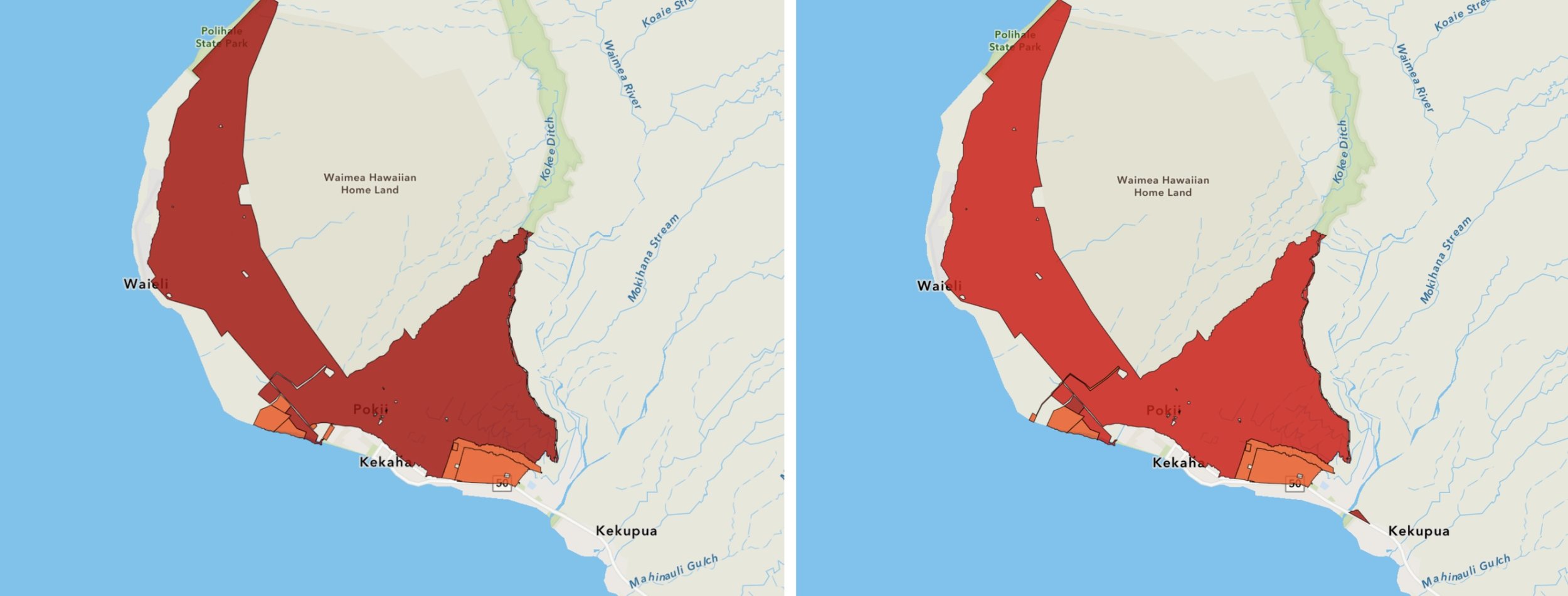
2020 & 2021
Key Findings
1. Most Frequent Application of RUP’s in Hawaiʻi
RUPs were applied the most frequently in West Kauaʻi (between Waimea and Mānā). Chronic exposure is linked to a series of health and environmental impacts, even at low levels. Frequent usage occurs on Mānā Plain adjacent to Polihale State Park.
2020: RUPʻs were applied 4.6 times per day on average
2021: RUPʻs were applied 3.8 times per day on average
2. Usage Near Coastal Areas Threatens Aquatic Life
Heavy usage occurs directly adjacent to coastal areas. Pesticide runoff from plantation-era ditches on the Mānā Plain flows through agrochemical fields and drains directly into the ocean.
From 2019–2021, between 13 to 16 active ingredients/RUPs were used in West Kauaʻi, all of which are considered toxic to aquatic species.
3. Massive Fumigant Use Near Schools
Sulfuryl Fluoride: 359.28 lbs (2020) → 6,161.41 lbs (2021); neurotoxic, volatile, spreads beyond the application site; inhalation risk for nearby schools and communities.
Aluminum Phosphide: 7.94 lbs (2020) → minor or not reported in 2021; extremely deadly fumigant gas; releases lethal phosphine on contact with moisture.
These fumigants are volatile, neurotoxic, and associated with respiratory and central nervous system impacts. Off-site movement via air makes proximity to schools and residential areas particularly concerning.
4. Persistent Herbicides Threaten Water and Ecosystems
S-Metolachlor: 606.3 lbs (2020) → 492.5 lbs (2021); persistent, mobile in soils, probable carcinogen, aquatic toxicity risk.
Atrazine: 691.64 lbs (2020) → 465.31 lbs (2021); endocrine disruptor, affects amphibian development, contaminates groundwater and surface water.
Bicyclopyrone: 12.33 lbs (2020) → 11.79 lbs (2021); HPPD inhibitor; ecological risks to aquatic life even at moderate exposures.
5. Widespread Use of Highly Toxic Insecticides & Herbicides
Methomyl: 102.12 lbs (2020) → 173.46 lbs (2021); highly toxic carbamate; inhibits cholinesterase; neurodevelopmental risk.
Synthetic Pyrethroids: Permethrin (49.71 → 89.58 lbs), Zeta-Cypermethrin (40.52 → 41.99 lbs), Beta-Cyfluthrin (6.28 → 0.01 lbs), Cyfluthrin (1.99 lbs), Esfenvalerate (17.49 → 14.71 lbs), Bifenthrin (1.40 → 25.26 lbs), Lambda-Cyhalothrin (15.64 → 4.49 lbs); highly toxic to bees, fish, aquatic invertebrates; persistent in sediments and soils.
Chlorantraniliprole: 41.8 lbs (2020) → 42.04 lbs (2021); lower mammalian toxicity but still poses risks to non-target arthropods.
Paraquat Dichloride: 133.82 lbs (2020) → 24.43 lbs (2021); remains acutely toxic with potential for fatal exposure even at very low quantities.
6. Communities Face Complex Chemical Mixtures
Multiple high-hazard chemicals—including fumigants, neurotoxic insecticides, herbicides, and pyrethroids—were applied concurrently in the same landscapes.
Combined exposure amplifies risks for:
Neurodevelopmental harm in children
Immune and endocrine disruption
Long-term chronic disease
Regulatory systems typically evaluate chemicals individually and do not fully account for mixture or cumulative exposures near schools.
Schools At Risk
Pesticide residues travel miles from application sites into schoolyards, homes, water catchments, and air. Chronic exposure threatens children’s developing bodies, contributing to:
Brain development impacts
Respiratory harm and asthma risk
Childhood cancer susceptibility
Hormonal/endocrine interference
Schools within 1 mile of RUP applications (2020–2021):
Ke Kula Niʻihau O Kekaha LPCS, Kekaha
Kekaha Elementary, Kekaha
Kula Aupuni Niʻihau PCS, Kekaha
St. Theresa School, Kekaha
Waimea Canyon Middle, Waimea
Waimea High, Waimea
Year-to-Year Trends
2020: Highest frequency of RUP applications in Hawaiʻi. Extremely large applications of fumigants (Sulfuryl Fluoride, Aluminum Phosphide) and persistent herbicides (Atrazine, S-Metolachlor) dominate. Methomyl and pyrethroids create acute toxicity risks for children and pollinators. All RUPs applied are toxic to aquatic species and applied close to marine environments.
2021: Highest frequency of RUP applications in Hawaiʻi. Fumigant use increased substantially (Sulfuryl Fluoride 6,161.41 lbs). S-Metolachlor and Bicyclopyrone maintained significant presence. Insecticide use remained substantial, with continued presence of permethrin, pyrethroids, and Methomyl. Paraquat application dropped but still presents acute exposure hazards. All RUPs applied are toxic to aquatic species and applied close to marine environments.
Overall hazard remains high, driven by large-mass herbicide use and ongoing applications of neurotoxic insecticides and pyrethroids.
Overall hazard remains high, driven by large-mass herbicide use and ongoing applications of neurotoxic insecticides and pyrethroids.
If you want the full West Kauaʻi Report, email safefarmssafefood@gmail.com 